

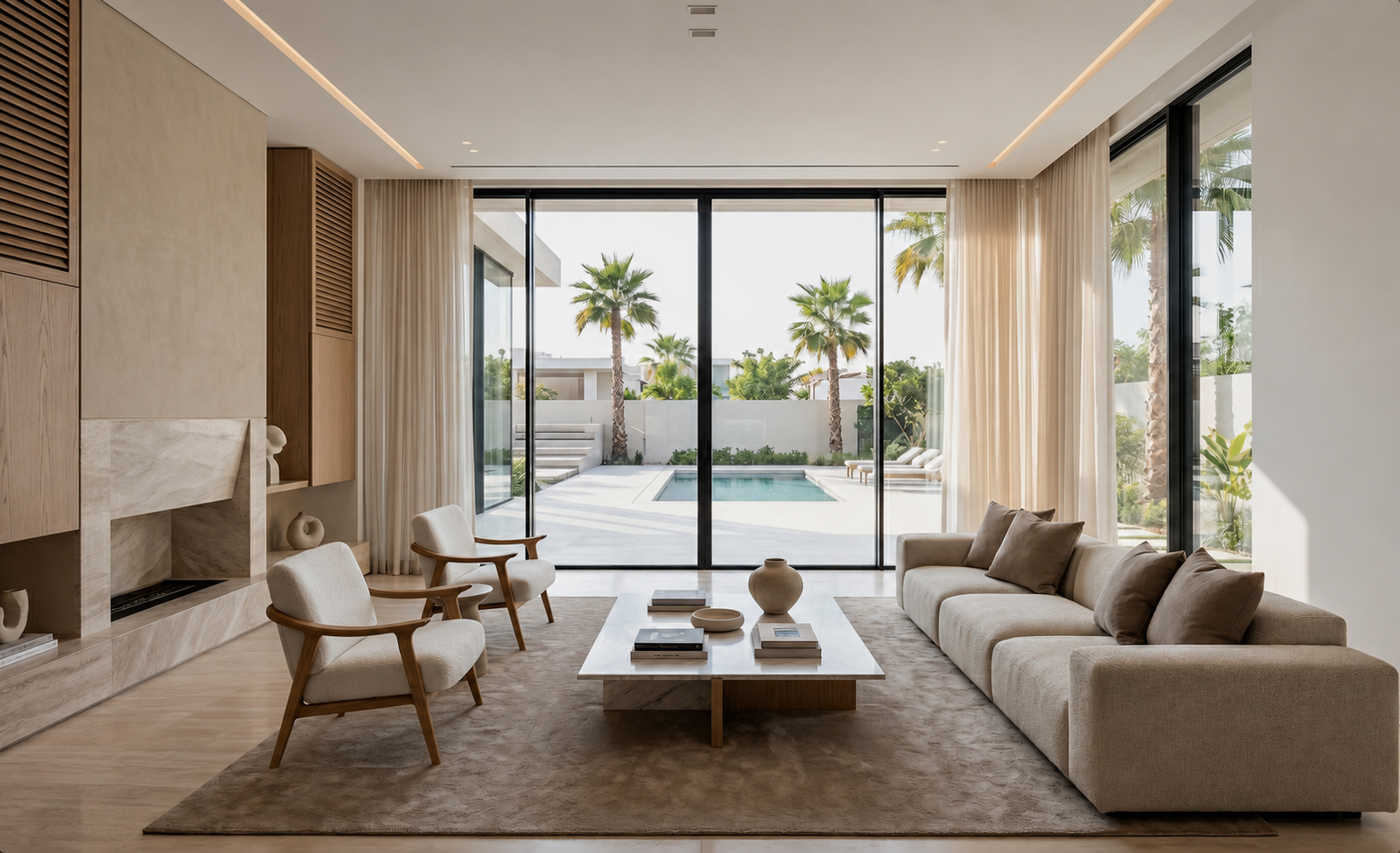
Slim framed sliding doors are one of the easiest ways to make a home feel bigger, brighter, and more connected to the outdoors. Instead of thick frames that block your view, you get wide sheets of glass held by thin, strong aluminium. The result is a wall that almost seems to disappear.
If you are planning a new build, a renovation, or a better patio door, this guide is for you. We will explain what slim framed sliding doors are, why so many homeowners and architects choose them, and how they compare with slimline sliding doors and a slim profile folding door. We will also cover the mistakes people often make, so you can avoid them. We will keep the language simple and the advice honest, like a chat with someone who has seen many projects from start to finish.
What Are Slim Framed Sliding Doors?
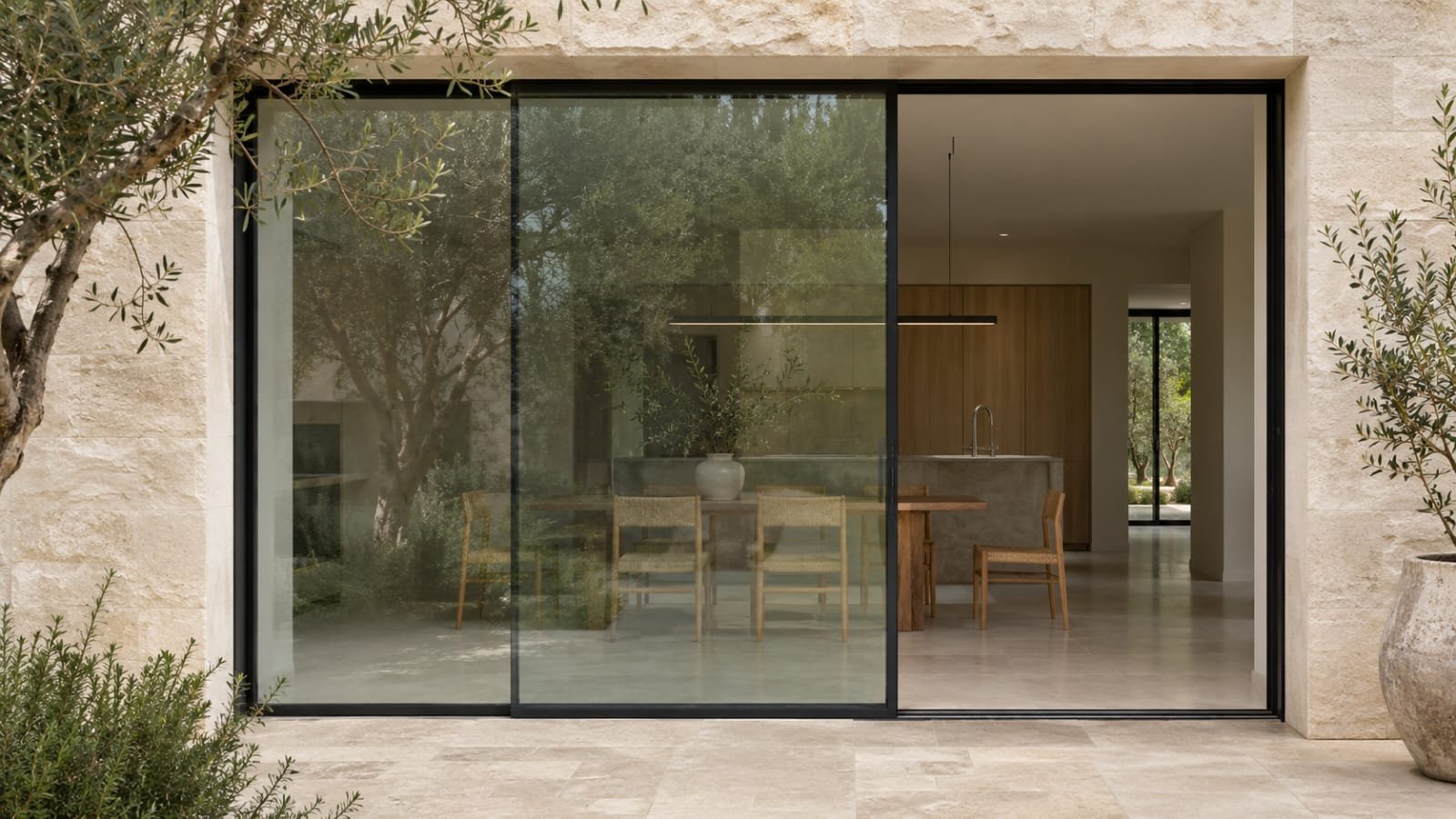
Slim framed sliding doors are sliding door systems with very narrow frames, so most of what you see is glass. The part of the frame you see when the door is closed is called the sightline. On a standard sliding door, the sightline can feel heavy and chunky. On slim framed sliding doors, it is kept as small as possible.
You will hear a few names for the same idea. Some people say slim profile aluminium sliding doors. Others say slimline sliding doors or minimal sliding doors. They all point to the same goal: thin frames, big glass, and a clean look.
How is this possible? The answer is strong material and smart engineering. Aluminium is strong, so thin profiles can carry heavy glass without bending. Good rollers, tracks, and seals do the quiet work in the background, so the door still glides smoothly and keeps out wind and rain.
Why Choose Slim Framed Sliding Doors?
When we talk with clients, the same reasons come up again and again. Here are the main ones, explained in plain words.
More Daylight
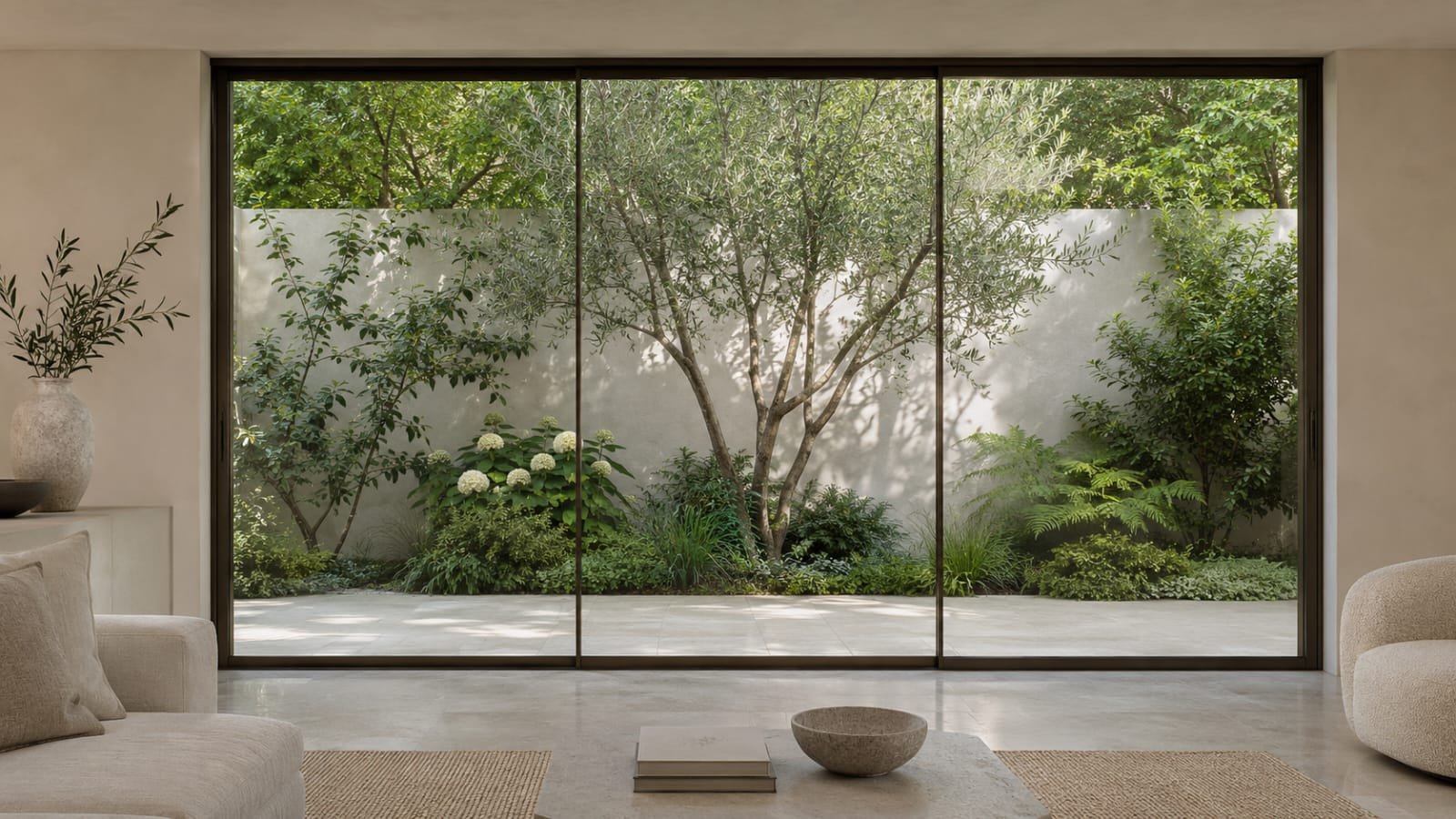
Thin frames mean more glass, and more glass means more natural light. A living room that felt dark in the afternoon can feel open and warm after the change. Daylight also helps your mood and can cut down the time you need lights on during the day. If your room faces a garden, terrace, or pool, the difference is easy to feel.
A Better View
A thick frame breaks up your view like the bars of a window. Slim framed sliding doors keep the view clean and wide. You see the garden, not the frame. For homes with a nice view, this is often the biggest reason to choose a slim design.
A Clean Modern Look
Architects love slim frames because they keep the design simple. The lines are sharp, the glass is large, and nothing pulls your eye away from the space itself. This style fits modern villas, but it also works well in older homes that need a fresh update.
Smooth Everyday Use
Sliding doors do not swing into the room, so you do not lose floor space. With the right system, even a large glass panel moves with a light push of the hand. That makes them easy for children, older family members, and anyone carrying shopping or a tray of drinks to the terrace.
Why Aluminium Works So Well for Slim Frames
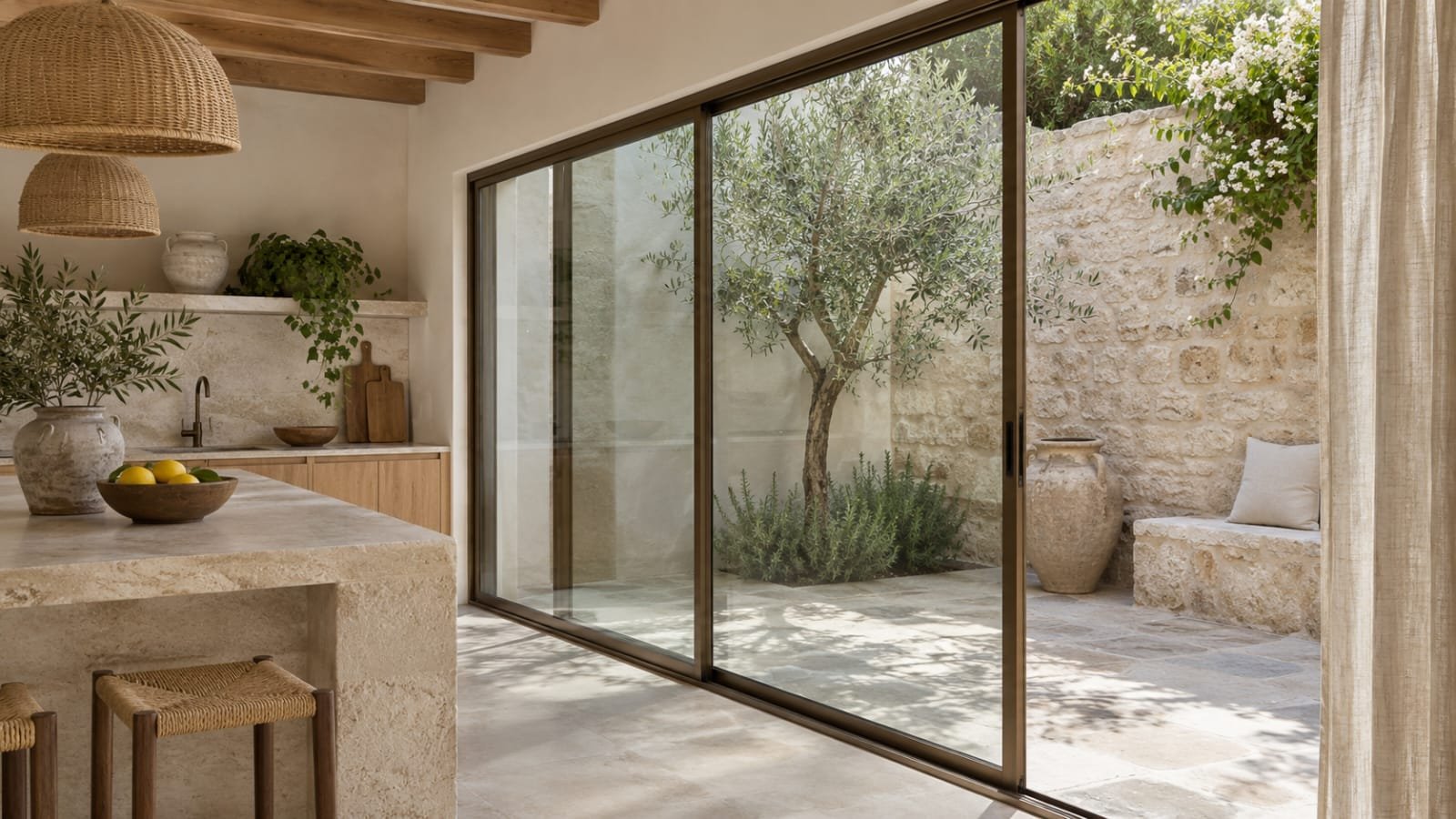
Many materials can be used for doors, but aluminium is the top choice when you want a slim frame. Slim profile aluminium sliding doors can hold large and heavy glass panels while keeping the frame thin. Other materials usually need thicker frames to give the same strength.
Strength Without Bulk
Aluminium has a high strength for its weight. That is why it is used in buildings, bridges, and even aircraft. In slim framed sliding doors, this strength lets the frame stay thin while still carrying big sheets of glass for many years. It also does not rot, warp, or swell with moisture, which keeps the doors working well over time.
Thermal Breaks
Aluminium carries heat and cold easily, so good systems use a thermal break. A thermal break is a strip of insulating material placed inside the frame. It separates the inner part of the frame from the outer part and slows down the flow of heat. When you pair it with quality double or triple glazing, slim framed sliding doors can stay comfortable in both cold winters and hot summers.
Colours and Finishes
Aluminium takes a powder coat finish very well. You can choose classic black, soft grey, white, bronze, or a custom colour that matches your windows and facade. The finish is tough and needs very little care, which makes it a smart choice for doors you will use every day.
Slim Framed vs Standard Sliding Doors
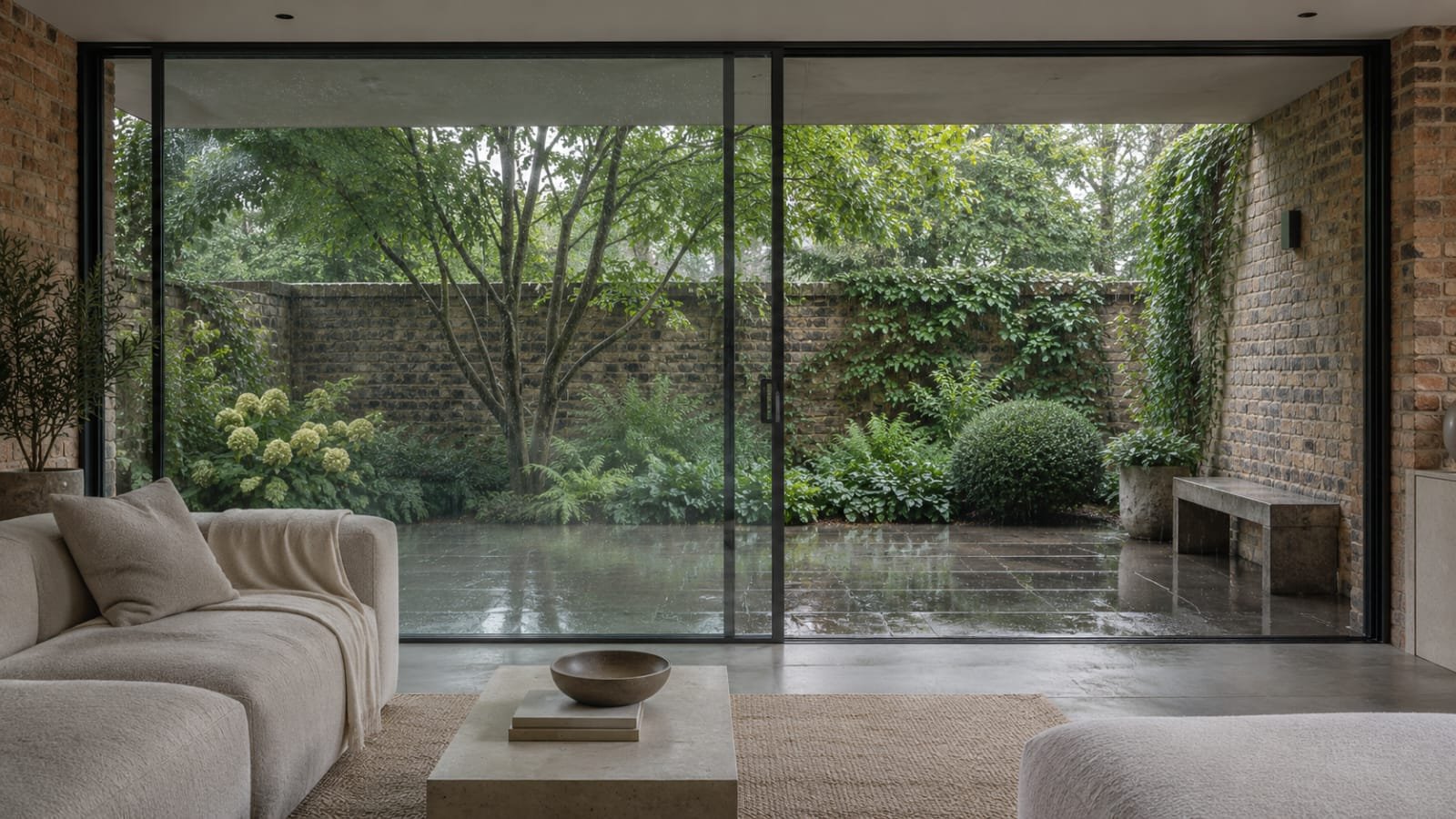
If you are not sure whether the upgrade is worth it, this simple comparison can help. It shows how slim framed sliding doors usually differ from standard sliding doors.
| Feature | Standard sliding doors | Slim framed sliding doors |
| Frame look | Thicker, more visible frames | Very thin frames with a minimal look |
| Glass area | Smaller share of the opening | Larger share of the opening |
| Daylight and views | Good | Excellent |
| Engineering | Simpler systems | More advanced rollers, tracks, and profiles |
| Price | Usually lower | Usually higher, but with a premium result |
| Best for | Basic upgrades and tight budgets | Villas, renovations, and design-led projects |
The honest truth is that slim framed sliding doors often cost more than standard doors. The profiles are more advanced, the hardware is stronger, and the installation needs more care. But if light, views, and style matter to you, most people feel the extra cost is worth it, because you will see and use these doors every single day.
Slim Framed Sliding Doors vs Slim Profile Folding Doors
Sliding doors and folding doors both create a large opening, but they work in different ways. Choosing between them depends on how you want to use the space.
How Slim Framed Sliding Doors Open
With slimline sliding doors, glass panels glide along a track and stack behind each other. Because the panels overlap, you can usually open only a part of the full width, for example half of the opening on a two-panel door. The big advantage is that the glass stays large and the frames stay thin. Sliding doors are also simple to use and do not take up space inside or outside the room.
How a Slim Profile Folding Door Compares
A slim profile folding door has panels that fold and stack to one side, like an accordion. When fully open, you can free up most of the width of the wall, although the folded stack stays in the opening. That is great for a terrace or dining area where you want a real indoor-outdoor feeling. The trade-off is that the folded panels need some space at the side, and there are more joints and hinges than on a sliding door.
Which One Should You Pick?
Here is a simple way to decide. Choose slim framed sliding doors if you want the largest uninterrupted glass view, smooth daily use, and a very clean look when the doors are closed. Choose a slim profile folding door if you want to open up most of the wall and make the room flow into the garden for parties and summer evenings. Many homes even use both, with sliding doors in the living room and a folding door in the dining or kitchen area.
How to Choose the Right Slim Framed Sliding Doors
Buying new doors is a big decision, so it helps to go step by step. Here are the points we always walk through with our clients.
Check the Size and Weight
Glass is heavy, and large panels can weigh a lot. The bigger the glass, the stronger the rollers, tracks, and frame need to be. Always measure the opening carefully and ask your supplier what the system can handle. Also check that the floor and the structure above the opening can support the doors properly.
Think About Glass and Comfort
The glass is the main part of these doors, so it matters. Double glazing is a good starting point, and triple glazing can make sense for colder places. If your doors face strong sun, ask about solar control glass to reduce heat. If noise is a concern, ask about acoustic glazing. It uses specially built laminated glass and should come with tested sound ratings, because ordinary laminated glass does not automatically reduce noise. If privacy is the concern, ask about privacy glazing as a separate option, such as frosted, tinted, or switchable glass, since ordinary laminated glass stays clear and does not make a room private.
Pick the Right Opening Layout
Slim framed sliding doors come in several layouts. A two-panel door is the most common. Three or more panels give you a wider opening. Some systems also allow corner openings or panels that slide into a wall pocket. Think about where you walk, where your furniture sits, and how much of the opening you want free.
Look at Hardware, Locks, and Safety
A thin frame should never mean a weak lock. Ask about multi-point locking, strong handles, and safety glass. Also ask how the threshold works. A low threshold looks neat and is easier for wheelchairs and prams, but it must still drain water well, especially in rainy climates.
Choose the Colour and Finish
Match the colour to your windows, facade, and interior style. Dark frames give a bold, graphic look, while white or light grey frames feel soft and airy. If you are not sure, ask to see samples in daylight before you decide.
Are Slim Framed Sliding Doors Energy Efficient and Secure?
This is one of the most common questions we hear, and it is a fair one. Large glass areas can lose or gain heat if the system is not designed well. The good news is that modern slim framed sliding doors are built for this. Thermal breaks, quality seals, and high-performance glazing work together to keep the indoor temperature steady and reduce draughts.
On security, slim does not mean weak. Good slim profile aluminium sliding doors use strong locking points, tough hardware, and safety glass. The key is to choose a quality system from a trusted maker and to have it installed correctly. A cheap copy with thin parts and poor locks is where problems start.
Slim Framed Sliding Doors for European Climates
Europe covers very different conditions, so the right specification depends on where you live.
Southern Europe: Sun and Heat
In Spain, Italy, Greece, Portugal and along the Mediterranean coast, strong sun is the main concern. Large glass areas can raise indoor temperatures and cause glare, so ask about solar control or Low-E glass, and consider shading such as a pergola, blinds or an overhang. Near the sea, ask which aluminium finishes and hardware suit coastal air.
Central and Northern Europe: Cold, Rain and Wind
In Germany, the Netherlands, the UK and Scandinavia, cold, rain and wind matter more. Look for thermally broken frames, double or triple glazing, good seals and a threshold that drains water well. In colder regions, check that the threshold and drainage are designed to cope with frost.
Thermal Performance and U-Value
Ask for the U-value of the complete door, including frame and glass, and check that it meets the energy requirements that apply to your building. Ask for tested air, water and wind data for the exact system, not only general claims.
Approvals and Building Requirements
Rules differ by country, region and municipality. Large glazed openings may need to meet national building rules and product standards, and extra checks may apply in conservation areas, listed buildings or apartment blocks with an owners’ association. Confirm the requirements before ordering.
Common Mistakes to Avoid
After seeing many projects, we know that most problems come from a few simple mistakes. Keep these in mind before you order.
- Choosing only on price. Very cheap slim framed sliding doors often use weak rollers, poor seals, and thin glass. They can stick, leak, or lose heat.
- Ignoring the glass weight. Large panels need strong hardware and a solid structure. Check this early, not after the order is placed.
- Forgetting about drainage and the threshold. Rainwater must have a clear way out, or it can collect in the track.
- Skipping solar control. South and west facing doors can heat a room fast. The right glass makes a big difference.
- Using an inexperienced installer. Even the best doors will not run smoothly if the frame is not level and square.
Installation and Care Tips
Why Professional Installation Matters
Slim framed sliding doors are precise systems. A small error in levelling can cause rubbing, noise, or gaps. A trained installer will check the opening, level the track, seal the edges, and test the door before leaving. This step protects both the performance and the warranty, so it is never worth cutting corners here.
A Simple Care Routine
The good news is that these doors need very little care. A few easy habits will keep them running like new:
- Clean the tracks every month or two to remove dirt, grit, and leaves.
- Wipe the frames and glass with a soft cloth, mild soap, and water. Avoid harsh chemicals.
- Check the seals and drainage holes for dirt or damage.
- Have the rollers and hardware checked by a professional if the door starts to feel stiff.
Where Slim Framed Sliding Doors Work Best
Slim framed sliding doors suit many types of buildings. In private villas and family homes, they open the living area to the garden or terrace. In renovations, they can replace old, heavy doors and make the whole room feel new. In hotels and restaurants, they bring in natural light and create a welcoming link between indoor and outdoor seating. In offices and commercial spaces, they give a modern, open look without losing comfort or safety.
If you are not sure whether they fit your project, ask an experienced supplier or installer to review your plans or a few photos of the opening. A quick review often shows what is possible.
FAQs About Slim Framed Sliding Doors
What Are Slim Framed Sliding Doors?
Slim framed sliding doors are sliding doors with very narrow aluminium frames and large glass panels. They are also called slimline sliding doors or slim profile aluminium sliding doors. Their main goal is to give you more light, clearer views, and a clean modern look.
Are Slim Framed Sliding Doors More Expensive Than Standard Doors?
Usually, yes. Slim framed sliding doors use more advanced profiles, stronger hardware, and larger glass, so the price is higher than a basic sliding door. Many customers feel the extra cost is worth it because of the better view, more daylight, and the premium look.
Are Slim Framed Sliding Doors Safe and Secure?
Yes, when you choose a quality system. Good slim framed sliding doors have multi-point locks, strong aluminium profiles, and safety glass. Always ask about the locking system before you buy.
Can Slim Framed Sliding Doors Work in Cold or Rainy Climates?
They can. Look for a system with thermal breaks, good seals, and double or triple glazing. A well-made door keeps out wind and rain and helps hold heat inside. Proper installation and drainage are just as important as the product itself.
How Are Slim Framed Sliding Doors Different From a Slim Profile Folding Door?
Slim framed sliding doors glide along a track and give you large, uninterrupted glass. A slim profile folding door folds and stacks to the side, so you can open most of the width of the wall. Sliding doors are simpler to use every day, while folding doors are better for a wide-open indoor-outdoor space.
How Wide Can Slim Framed Sliding Doors Be?
It depends on the system, the glass weight, and the structure around the opening. Many modern systems can handle very large panels, but each product has its own limits. The best step is to share your opening size with your supplier and ask for the maximum size and weight the system can safely carry.
How Do I Clean and Care for Slim Framed Sliding Doors?
Wipe the frames and glass with a soft cloth and mild soap. Clean the tracks every month or two, check the drainage holes, and have the hardware checked if the door starts to feel stiff. With this simple routine, slim framed sliding doors can last for many years.
Final Thoughts on Slim Framed Sliding Doors
Slim framed sliding doors give you more of what makes a home feel good: light, space, and a view. They look clean and modern, they are easy to use, and with quality aluminium, strong glass, and careful installation, they can serve you well for many years.
Before you decide, think about your opening size, your climate, and how you want to use the space. Compare slimline sliding doors with a slim profile folding door, and do not choose on price alone. A good system from a trusted maker will always save you stress later.
Ready to Plan Your Slim Framed Sliding Doors?
Whether you are building a new home, renovating, or designing a hotel or commercial space, start by measuring your opening and deciding how much of it you want free. Then request written quotations from qualified local suppliers using the same specification, and ask each one for the data sheet covering size limits, thermal and weather performance, security details and warranty terms, so you can compare options fairly.