


An oversized pivot door is one of the boldest ways to make an entrance feel grand. Instead of swinging on side hinges, the door turns on a vertical pivot axis, which can sit near the door’s edge or be set toward the centre. This lets very tall, wide and heavy doors move smoothly and look impressive. Many homeowners, architects and builders now choose an oversized pivot front door as the main feature of a modern home.
But a door this size is not just a bigger version of a normal door. The weight, the hardware, the structure around it and the way it swings all need careful planning. This guide explains how pivot systems work, how they compare with standard hinges, the key construction details, five design ideas and what to check before you buy.
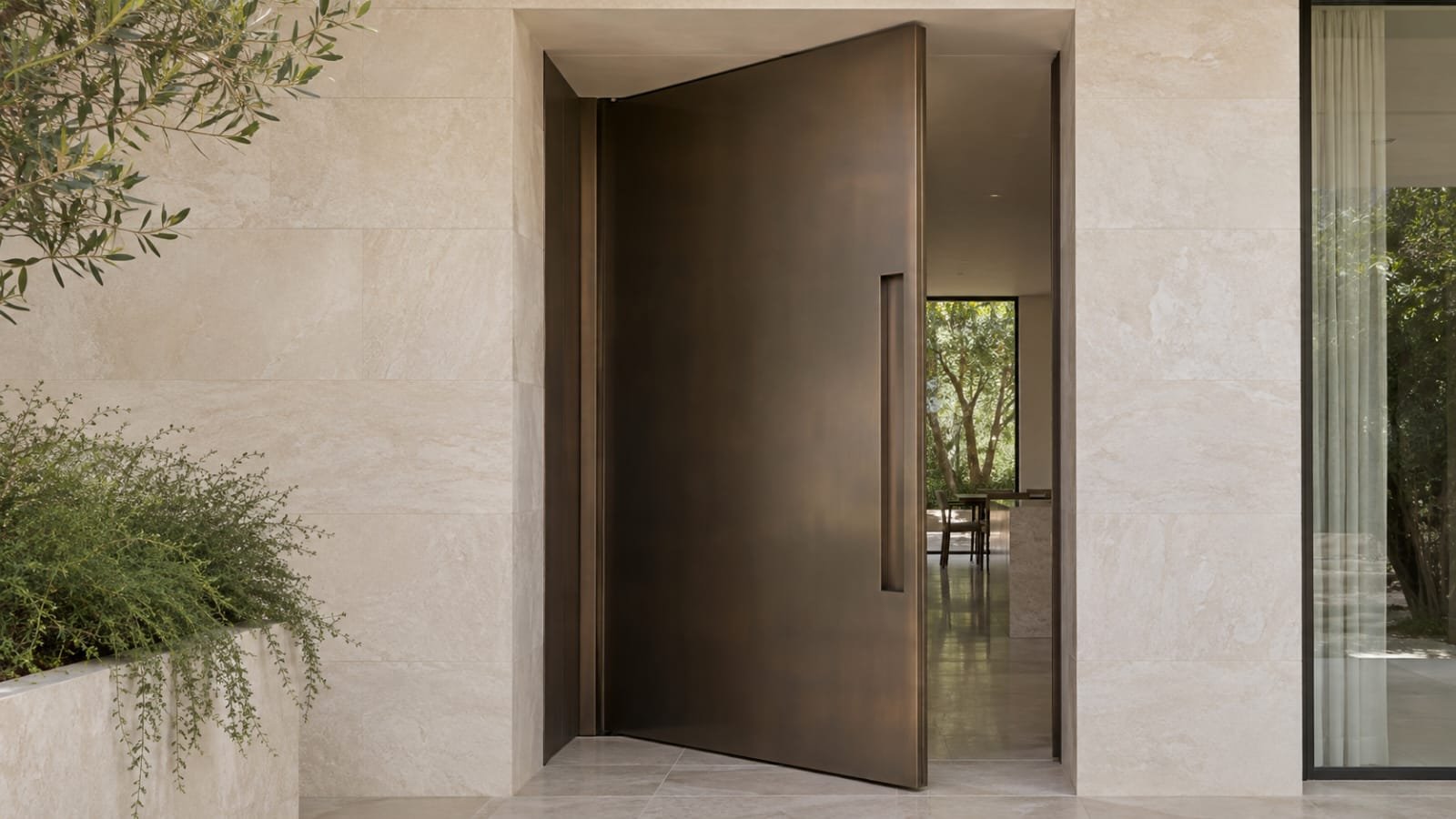
What Is an Oversized Pivot Door?
An oversized pivot door is a door that is taller, wider or heavier than a standard door and turns on a pivot system instead of side hinges. It rotates around a vertical axis rather than swinging from the edge.
A pivot system usually has two main parts:
- A top pivot fixed into the frame or structure above the door.
- A bottom pivot fixed into the floor or threshold, which typically carries most of the door’s weight.
Because the weight is carried through the pivot and not through side hinges, a pivot system can suit much larger doors. That is why this style is popular for modern entrances, glass entries and statement interiors.
Standard Hinges vs Pivots on Very Large Doors
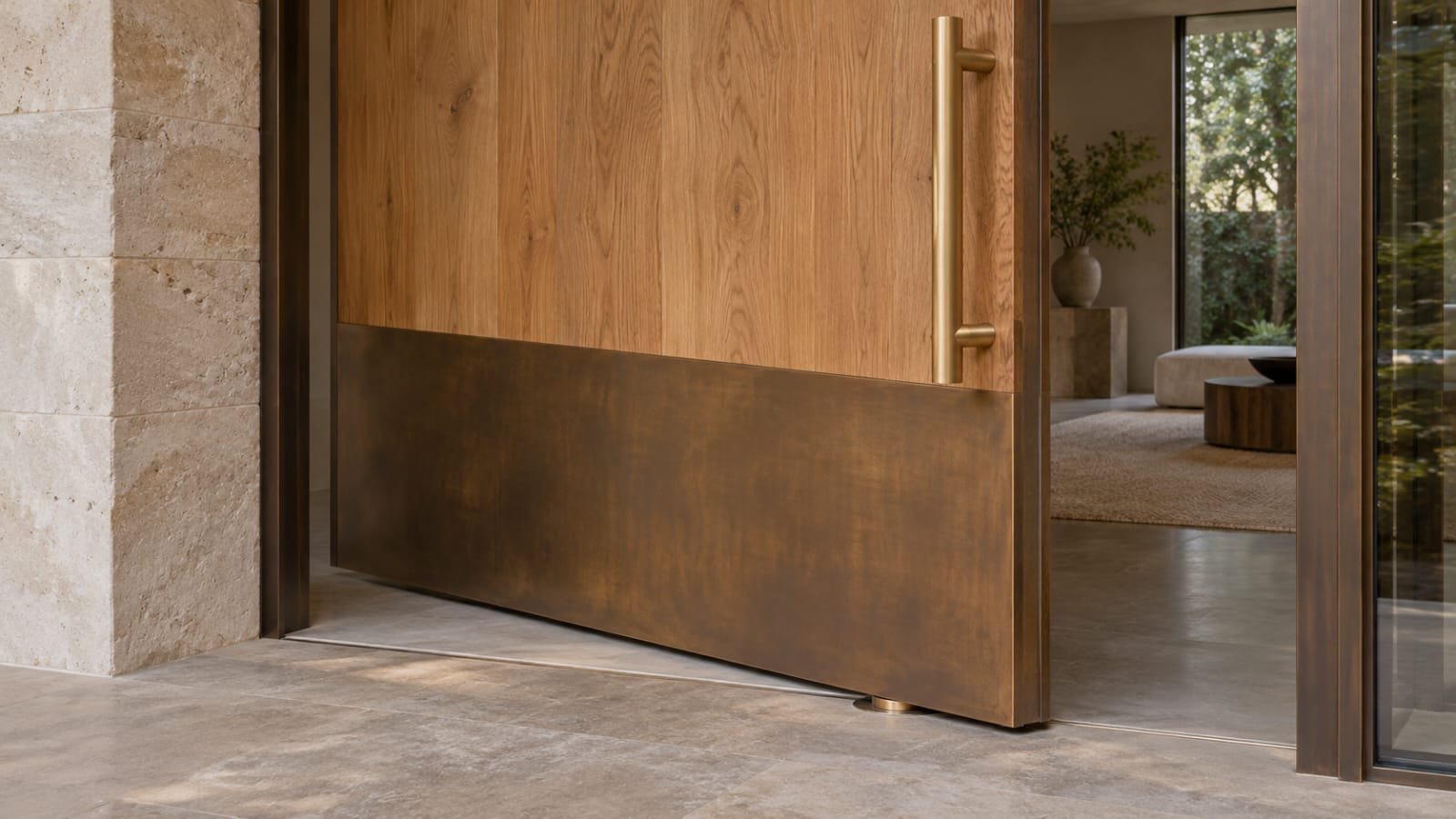
To see why pivots are so common on very large doors, it helps to look at the limits of standard hinges. Hinges that are not specified for a door’s size and weight may cause problems, such as:
- Sagging: A heavy door pulls down and out on its hinges. Over time the door can drop, rub on the frame and stop closing properly.
- Wear: Side hinges carry the load on a few small contact points, so they may wear faster on big doors.
- Frame stress: The weight pulls on the door frame and the wall beside it, which can lead to misalignment.
- Size limits: Many standard hinges are not made for very tall or wide leaves.
- Gaps and draughts: Once a door sags, the seals may no longer close evenly, which affects comfort and weather protection.
- Adjustment: Hinges on heavy doors may need frequent adjusting.
Heavy-duty hinge systems do exist, so hinges are not always the wrong choice. But a well-designed pivot system spreads the load differently: the bottom pivot carries the weight down into the floor structure, and the top pivot keeps the door stable. This is why pivots are a common choice for very large doors.
How Pivot Doors Work
When you push the door, it turns around the pivot axis. The axis can be placed in different positions, and this changes how the door opens:
- Centred pivot: The axis is near the middle of the door, so the door opens in two parts, with one side swinging in and the other swinging out.
- Offset pivot: The axis is set back from the centre, which gives a wider clear opening on one side and a more natural entry path. Some designs place the axis close to the door’s edge.
The pivot position affects how the door looks when open, how much space it needs and how it feels when you use it. Ask your supplier to show the swing path before you finalise the design.
Construction Details: 5 Key Elements
Five elements decide how well a large pivot door performs and how long it lasts: what supports it, what it is made of and how it seals and locks.
- Pivot hardware
The pivot set is the heart of the system. Check the manufacturer’s rated load capacity, the bearing quality and whether the pivot is adjustable. Good hardware lets installers fine-tune the door height and alignment after fitting. Follow the pivot manufacturer’s rated capacity and the project engineer’s requirements when you choose the hardware for the actual door weight. - Door leaf construction
The leaf must be stiff enough not to twist or bow. Common options include solid or engineered timber, aluminium frames with glass or panels, and steel-reinforced designs. Heavier materials need stronger hardware and support. - Threshold and seals
A pivot door needs a threshold and seal design that helps keep out wind, rain and dust without blocking the swing. Good detailing includes drainage, weather seals and a floor finish that can handle regular use. - Locking and handle
Large pivot doors usually use a concealed or multi-point lock with a long pull handle. Ask how the lock fits into the frame, how the door is secured at the top and bottom, and which security standards the system meets. - Structure above and below
The floor must carry the weight of the door at the bottom pivot, and the head above must hold the top pivot firmly. In many projects, this means planning the slab, the lintel and the framing before the door arrives. Share the door weight and size with your builder and engineer early.
Floor Plan and Swing Space
Floor planning is easy to forget, yet it decides how well the door works. On a plan, check:
- Swing arc: Both the inside and outside paths must be clear of walls, planters, furniture and steps.
- Pivot position: A centred or offset pivot changes the clear opening and the entry path.
- Landing area: There should be a flat, safe space on both sides of the door.
- Door stops: Plan where the door stops so it does not hit a wall or glass panel.
- Wind exposure: A large leaf can catch the wind, so consider the direction and exposure of the entrance.
Ask for a simple plan drawing that shows the full swing before you approve the order.
5 Modern Front Door Styles for Inspiration
Here are five general styles to help you picture the possibilities. They are shown for design inspiration only. Ask your supplier which materials and configurations are available for your project.
- Solid timber pivot door
A full-height timber leaf with a long vertical handle creates a warm, natural entrance. It works well with stone, render or dark cladding. Timber needs a quality finish and regular care, especially on exposed, sunny or damp façades. - Aluminium pivot door
An aluminium leaf offers strength with a slim, modern look. Aluminium frames can carry large panels and come in many powder-coated colours. This is a popular choice for contemporary homes and low-maintenance entrances. - Glass pivot door
A glass leaf in a slim frame fills the hallway with light and gives a clean, open view. Safety glass and the right glazing are essential for security, comfort and privacy. Frosted, tinted or reeded glass can add privacy without losing daylight. - Mixed material pivot door
Combining timber, metal and glass gives a layered, designer look. For example, a timber lower section can sit under a glass top, or metal strips can frame a solid panel. This style suits modern homes with strong architectural character. - Pivot door in a neoclassical interior
Pivot doors are not only for modern houses. In a neoclassical interior, a pivot door can mix classic proportions, panelled details and brass hardware with the smooth movement of a pivot. It makes a dramatic link between formal rooms.
Solid Brass Hardware for Large Pivot Doors
Hardware is where beauty meets function. Solid brass is popular on large pivot doors for several reasons:
- Strength: Solid brass is dense and durable, and handles heavy use well.
- Appearance: It gives a warm, rich finish that suits timber, dark metal and neoclassical styles.
- Ageing: Natural brass develops a patina over time, while lacquered brass keeps its shine for longer.
- Feel: A solid brass handle feels substantial in the hand, which matches the scale of a large door.
Ask whether the hardware is solid brass or only brass-plated, and what finish protects it. In coastal or humid locations, ask which finishes and grades suit that environment.
Choosing a Pivot System: What to Look For
There is no single best system, because the right choice depends on the weight, size, material and location. Use this checklist when you compare options:
- Rated capacity: Check that the pivot’s rated capacity covers the actual door weight, and follow the manufacturer’s and project engineer’s requirements.
- Adjustability: You should be able to adjust height, alignment and tension after installation.
- Smooth movement: Ask how the door feels when opened, and whether it has damping or a closer option.
- Weather performance: Check air, water and wind data for external doors.
- Security: Confirm the locking system and glass or leaf specification.
- Installation support: Pivot doors need skilled fitting, so look for experienced installers.
- Warranty and documents: Request written terms, data sheets and installation guidance.
Pivot Doors in European Climates
Europe covers very different conditions, so the right specification depends on where the door will be installed. A large entrance door has to cope with weather, energy-efficiency expectations and local regulations. Here are a few points to check:
- Southern Europe (Spain, Italy, Greece, Portugal, the Mediterranean coast): Strong sun, heat and salt air near the coast are the main concerns. Choose finishes suited to UV and coastal conditions, and consider solar control glass to reduce heat and glare on exposed entrances.
- Central and Northern Europe (Germany, the Netherlands, the UK, Scandinavia): Rain, wind, cold and damp matter more. Look for good seals, threshold drainage and strong thermal performance to limit heat loss and draughts.
- Thermal performance: Ask for the door’s U-value and glazing specification, and check that it meets the energy requirements that apply to your building.
- Airtightness and watertightness: Ask for tested air, water and wind performance data for the specific door, not only general claims.
- Frost and snow: In colder regions, check that the threshold, drainage and pivot area are designed to cope with freezing conditions and snow build-up.
- Security: Ask which security class or standard the door and locking system meet, as requirements and insurer expectations vary between countries.
- Standards and approvals: Large external doors may need to meet national building rules and product standards, and extra checks may apply in conservation areas, listed buildings or apartment blocks with an owners’ association. Confirm the requirements with your local authority or building control before ordering.
Always ask the supplier for tested data and documentation for the specific door.
Cost and Budget Factors
Prices vary widely, so it is better to compare the specification than to look for one figure. The main cost factors are:
- Size and weight: Bigger doors need stronger hardware and more material.
- Materials: Timber, aluminium, glass, steel and mixed designs all differ in price.
- Hardware: Heavy-duty pivots, solid brass handles and concealed locks cost more than standard parts.
- Glass specification: Safety, solar control, thermal, acoustic and privacy options add to the cost.
- Structural work: Floors, lintels and framing may need preparation.
- Installation: Skilled fitting and adjustment are essential.
To compare quotations fairly, give each supplier the same size, material, glass, hardware and installation scope.
Maintenance Tips
A large door works best when it is looked after. A few simple habits help:
- Clean the door, glass and frame regularly with mild soap and a soft cloth.
- Check the pivots, seals and thresholds once or twice a year.
- Follow the manufacturer’s instructions for the pivot area, threshold and drainage details of your specific system, and keep them clear of dirt, leaves and debris.
- Ask a professional to adjust the door if it starts to rub, drop or feel stiff.
- Follow the manufacturer’s advice for timber, brass and powder-coated finishes.
Frequently Asked Questions
What is an oversized pivot door?
It is a large door that rotates around a vertical pivot axis instead of using side hinges. The pivot carries the weight, so the door can be much taller, wider or heavier than a standard hinged door.
Why do standard hinges struggle on very large doors?
Side hinges carry the load on a few small points. If they are not specified for the door’s size and weight, they may wear, sag and pull the frame out of alignment. Pivot hardware carries and spreads the load differently.
How heavy can a pivot door be?
It depends on the pivot system, the frame and the structure around the door. Check the pivot manufacturer’s rated capacity and have the structure confirmed by a qualified professional.
Is a large pivot front door secure?
It can be, when the door has a strong locking system, a suitable leaf or glass specification and correct installation. Ask for the security details of the exact system.
Can I choose an aluminium or a glass pivot door?
Yes. Aluminium frames suit slim, modern designs, and glass leaves give a bright, open look. Choose safety glass and a system designed for the size you need.
What is the best material for a pivot door?
There is no single answer. Timber gives warmth, aluminium gives slim profiles and low maintenance, and glass gives light. The best choice depends on your style, climate and budget.
Do large pivot doors need special head or structural support?
Yes. The bottom pivot needs a solid floor or threshold fixing, and the top pivot needs a strong fixing point in the head above. Plan this early with your builder or engineer.
Are pivot doors suitable for European climates?
They can be, if the materials, finishes, seals, glazing and thermal performance suit your region, from hot Mediterranean sun to cold, wet northern winters. Ask for tested data and check local building requirements.
Final Thoughts on Choosing an Oversized Pivot Door
An oversized pivot door gives a home a strong first impression, smooth movement and a sense of scale that standard doors cannot match. To get the best result, choose pivot hardware that suits the real door weight, plan the floor and structure early, and match the materials and finishes to your climate.
Compare complete specifications, not only the look, and work with experienced suppliers and installers. A well-planned door will not only look impressive on day one, but also keep working smoothly for years.
Ready to Plan Your Oversized Pivot Door?
Gather your plans, opening size and design ideas, then request written quotations from qualified local suppliers using the same specification. Ask each one for the data sheet covering size limits, rated capacity, thermal and weather performance, and warranty terms, so you can compare options fairly and choose the right system for your home.