

A bioclimatic pergola is an outdoor structure with a roof of adjustable louvres. You can tilt the louvres open to let in sun and fresh air, or close them to create shade and, depending on the system, shelter from rain. That simple idea can turn a patio, terrace or grand traditional pergola .
This guide answers the basics in plain words. It covers how a bioclimatic pergola works, the main types, roof and design ideas, costs, and a few smart ways to save money.
What Is a Bioclimatic Pergola?
A is an open outdoor structure with posts and a roof made of beams or slats. It gives partial shade, but it does not stop rain or strong sun.
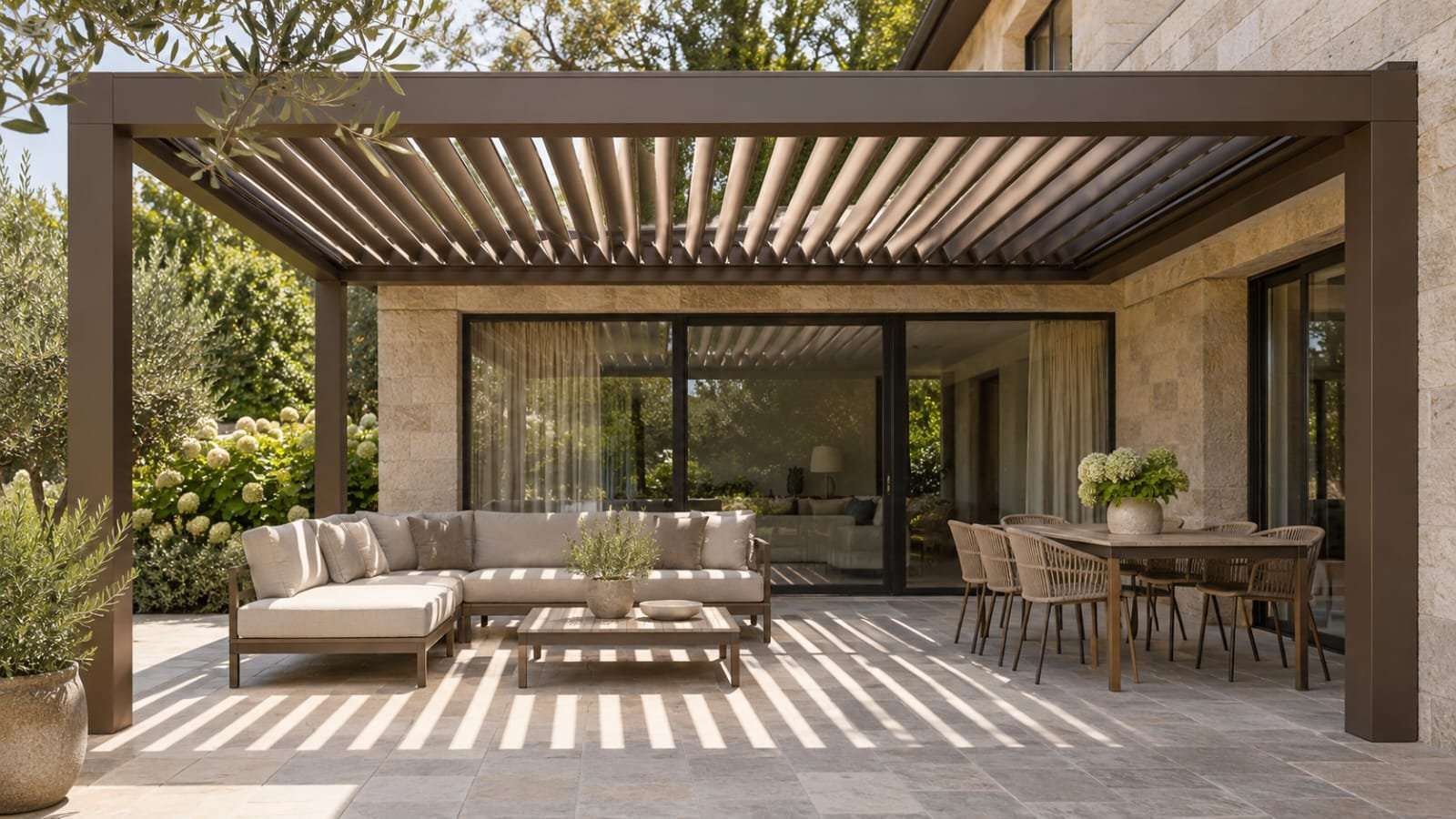
A bioclimatic pergola takes this idea further. Its roof is made of aluminium louvres that rotate, so you control how much light, heat and air comes in. It is also called a louvred pergola, and most models use a motor with a remote or an app.
The word “bioclimatic” simply means that the structure responds to the climate. You adjust it to the sun, the wind and the rain, instead of adapting your plans around them.
What Is a Bioclimatic Pergola For?
The main purpose of a pergola is to create a defined, comfortable outdoor room. A bioclimatic pergola can be used for:
- Outdoor dining and cooking: Shade and cover make meals outside easier.
- Relaxing and entertaining: A covered lounge area works well in the evening.
- Home offices and play areas: A shaded corner stays usable on bright days.
- Restaurants, cafes and hotels: Businesses can extend their terrace seating without building a full indoor room.
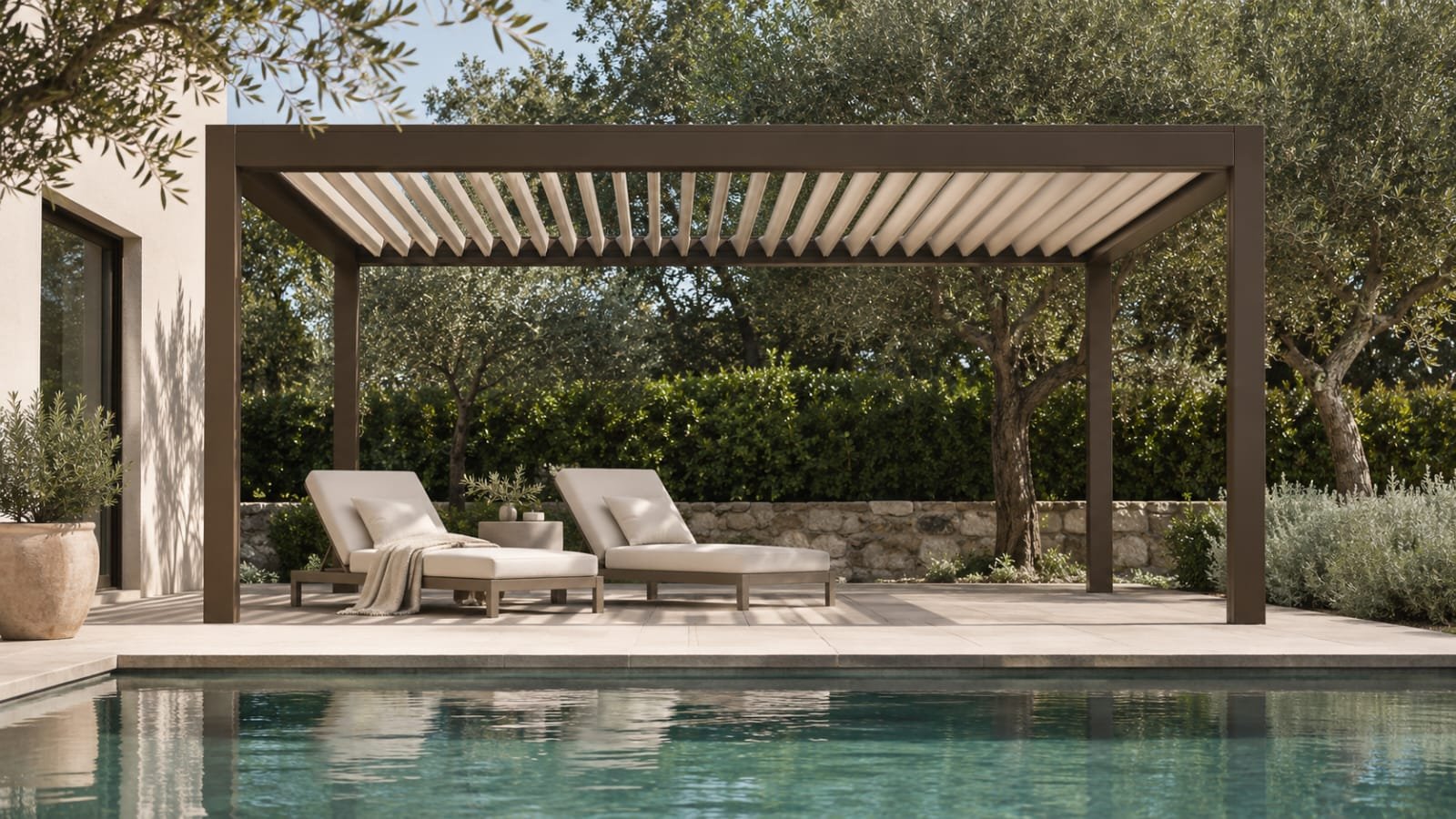
- Poolside shade: Louvres give protection from strong sun while keeping the area airy.
Compared with a plain patio cover or fixed roof, the main benefit is control. You choose between shade, sunlight and airflow whenever you like.
How Does a Bioclimatic Pergola Work?
- The frame: Aluminium posts and beams carry the roof. The frame should be specified for the wind and snow loads of your site, so check the system’s ratings.
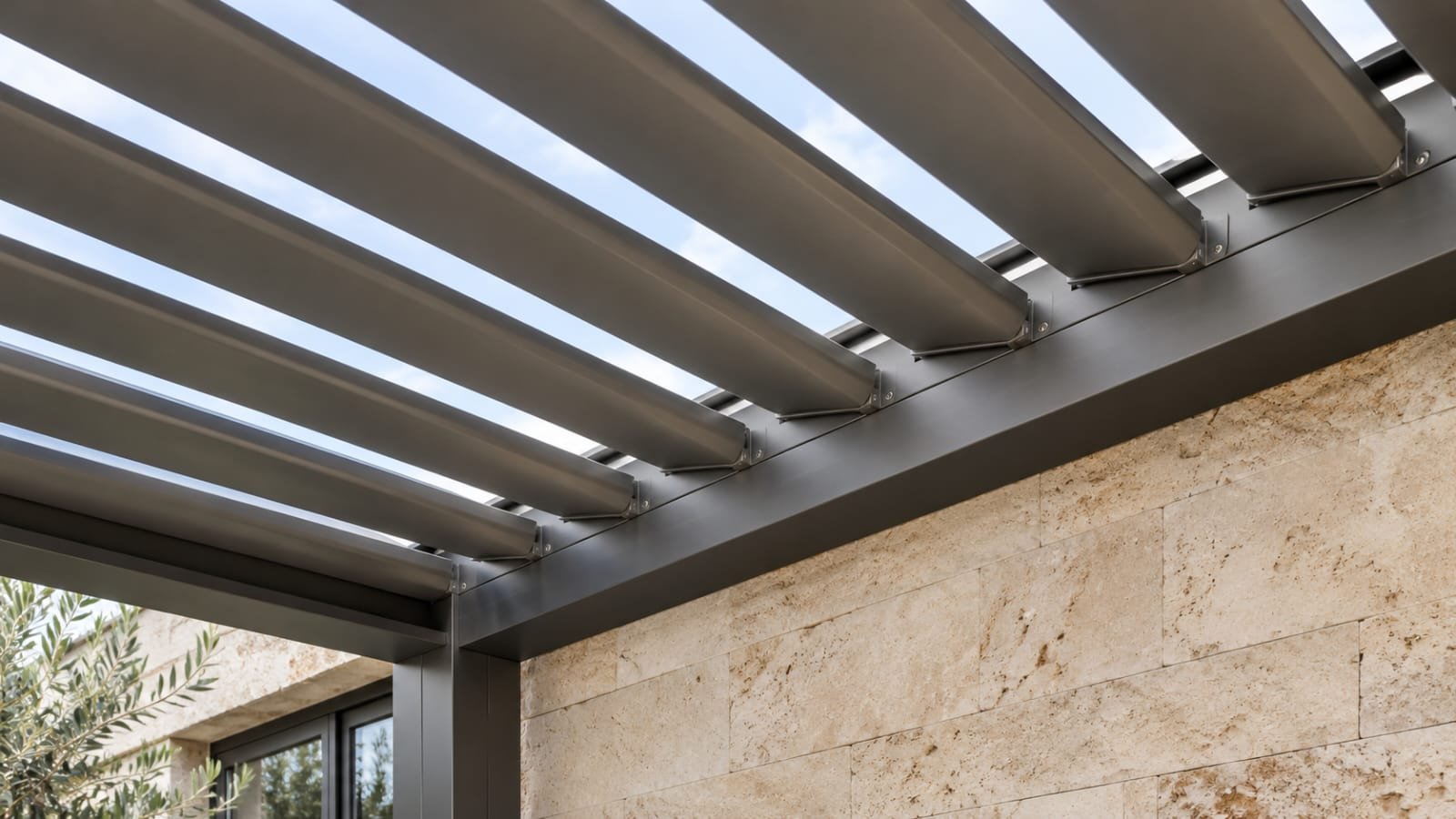
- The louvres: The roof is made of horizontal blades that rotate on a central axis.
- The motor: A small motor tilts the louvres. Depending on the system, you control it with a remote, a wall switch or an app.
- Open position: With the louvres open, sunlight and fresh air pass through, and warm air can escape.
- Closed position: When the louvres close, they overlap to form a roof that provides shade. A closed louvre roof is designed to shed rain, but performance depends on the specific system and conditions.
- Drainage: Water is designed to run along the blades into built-in gutters and down channels in the posts.
Some systems offer optional extras such as rain and wind sensors, lighting or heaters. Availability varies by system, and how any sensor responds is set out in the manufacturer’s instructions, so check what is included and how it operates before you buy.
What Kind of Roof Can a Pergola Have?
- Open slat or beam roof: The classic style. It gives dappled shade but no rain cover.
- Fixed solid roof: Polycarbonate, glass or panels give constant cover but no adjustment.
- Louvred roof: The bioclimatic option. It is adjustable, and when closed it is designed to provide shade and shed rain.
A louvred roof is the most flexible of the three, because it gives you control over shade, light and ventilation in one structure. Always ask for the manufacturer’s tested rain, wind and load ratings, so that you know the model suits your site.
Operable, Movable and Fixed Pergola Types
- Operable pergolas: The louvres can be opened and closed, usually with a motor. This is the standard bioclimatic setup.
- Movable pergola designs: The term usually means that the roof or its parts can move. It can refer to rotating louvres or to a retractable roof that slides back. It does not normally mean that the whole structure can be relocated.
- Fixed roof pergolas: The roof does not move. These often cost less but offer less control.
If you want flexibility, choose an operable model. If you only need permanent cover at the lowest price, a fixed roof may be enough.
Attached, Wall-Mounted and Freestanding Layouts
Attached aluminium pergola: Fixed to a wall of your building. Because the wall carries part of the load, it can use fewer posts, and it makes a smooth link between indoors and outdoors. The wall and structure must be strong enough to carry the loads, and the roof should drain away from the building. A qualified professional should check this.
Wall-mounted pergola: Rests against a wall or beam on one side and stands on posts on the other. Suppliers may name it differently, so check the exact name and how the structure is supported before you compare quotes. It often suits narrow terraces, balconies and spaces beside a building, which are common in European townhouses and apartments.
Freestanding pergola: Stands on its own posts on all sides. It suits gardens, pool areas and spaces away from the house.
Bioclimatic Pergola vs Panel Pergola and Fixed Patio Roofs
A panel pergola uses solid panels or sheets instead of louvres. These may be made of glass, polycarbonate or insulated metal. A panel roof gives constant cover and can be simpler and cheaper than a motorised system.
However, it does not give the same ventilation, and you cannot adjust the amount of light. A bioclimatic pergola often costs more, but it offers more comfort and control. If you only need basic cover, a panel or fixed roof may suit you. If you want to adjust the space to the weather and the time of day, louvres are usually the better fit.
Ideas for the Underside of the Pergola Roof
- Integrated LED strips: Light built into the louvres or beams can give soft evening lighting.
- Ceiling fans: A fan under the roof can help in hot weather.
- Heaters: Infrared heaters can extend the season on cool evenings.
- Colour matching: Choose a roof colour that matches your window frames and facade.
- Hidden wiring: Cables that run inside the frame keep the underside clean and neat.
Availability of lights, fans and heaters varies by system. Ask the supplier which accessories are available and compatible, and who installs them.
Modern Pergola Designs With a Roof
- Minimal black or anthracite frames that look sharp against light walls.
- Slim louvres that give a sleek roofline.
- Side panels or sliding screens that can add privacy and reduce wind and low sun, where the system offers them.
- Blinds that can provide extra shade at low sun angles, where the system offers them.
- Combined indoor-outdoor layouts where the pergola extends a living room or kitchen.
Aluminium is the most common material for modern designs, because its strength allows slim profiles. Confirm which of these options are available for the system you choose.
What Affects Bioclimatic Pergola Cost?
There is no single price that fits every project, because the final figure depends on your choices. A bioclimatic pergola usually costs more than a basic open pergola because of the motor, the louvres and the engineering behind them.
- Size: Larger roofs need more material and stronger frames.
- Layout: Attached, wall-mounted and freestanding models have different material needs.
- Features: Sensors, lighting, heaters, side screens and smart controls, where available, add to the price.
- Material and finish: The quality of the aluminium, coating and hardware makes a difference.
- Installation: Site preparation, electrical work and drainage connections all count.
- Local approvals: Some areas need planning permission or approved drawings.
The best way to get an accurate figure is to ask for a written quotation. Give each supplier the same size, layout and feature list so that you can compare them fairly.
Budget Tips for a Bioclimatic Pergola
- Choose an attached or wall-mounted layout. Using your building wall can save posts and material.
- Keep the size practical. Cover the area you really use instead of the whole terrace.
- Start with the essentials. Ask which extras, such as lights, heaters and screens, are available for your system and whether they can be added later.
- Choose standard sizes. Custom sizes usually cost more.
- Compare complete quotations. Check that installation, electrics and drainage are included.
- Think long term. A quality aluminium frame that needs little maintenance can save money over the years.
If a full louvred system is beyond your budget, a fixed panel roof or a simple open pergola can be a more affordable alternative.
Choosing a Bioclimatic Pergola for European Climates
Europe covers very different conditions, so the right specification depends on where you live.
- Southern Europe (Spain, Italy, Greece, Portugal, the Mediterranean coast): Strong summer sun and heat are the main concern. Adjustable louvres let you reduce direct sun at different times of the day. Shade makes an outdoor area more comfortable but does not cool the air on its own, so fans or misting may help.
- Central and Northern Europe (Germany, the Netherlands, the UK, Scandinavia): Rain, wind and cooler evenings matter more. Look for good drainage, and consider heaters and lighting to extend the season. In regions with snow, ask for the system’s snow load rating and what to do before heavy snowfall.
- Rain and drainage: Check that gutters and downpipes can handle heavy downpours, and that water drains away from the building and neighbouring property.
- Wind: Ask for the wind rating of the system and how the louvres behave in strong wind. If the system includes sensors, ask how they operate according to the manufacturer’s instructions, and do not assume they will close the roof in every condition.
- Coastal air: Near the sea, ask which aluminium finishes and fixings suit coastal conditions.
- Leaves, pollen and dirt: Debris can collect on louvres and in gutters, especially under trees. Plan regular cleaning.
- Approvals: Rules differ by country, region and municipality. Many projects need planning permission or a building notification, and extra checks may apply in conservation areas, listed buildings, or apartment blocks with an owners’ association. Check the requirements before ordering.
Always ask for tested data for the specific system rather than general claims, and check that it meets the building requirements that apply where you live.
Is a Bioclimatic Pergola Right for You? Pros and Things to Check
Advantages
- Adjustable shade, light and airflow
- Designed to provide cover from rain when the louvres are closed
- Can extend the time you spend in your outdoor space
- Low-maintenance aluminium construction
- A modern look that can add to the appeal of a property
Things to check before you buy
- Wind, snow and weather ratings: Confirm the model suits your site.
- Structure: Make sure the floor and any attached wall can carry the loads.
- Drainage: Water must have a clear route away from the structure.
- Power supply: A motor and extras need a safe electrical connection.
- Approvals: Check the local rules before ordering.
- Warranty and support: Ask for written terms and technical data sheets.
How to Choose the Right Bioclimatic Pergola
- Decide where it will go: attached, wall-mounted or freestanding.
- Measure the space and note any obstacles such as trees, pipes or windows.
- Choose the features you need now and those you may want later, and confirm they are available for the system.
- Ask about louvre rotation, rain drainage and tested wind and snow performance.
- Request the same specification from every supplier.
- Check the installer’s experience with louvred systems.
- Read the warranty and maintenance instructions.
Bioclimatic Pergola Maintenance Tips
- Rinse the louvres and frame with water and mild soap a few times a year, and more often near trees or busy roads.
- Clear leaves and dirt from gutters and drainage channels.
- Check the motor and any sensors or controls, following the manufacturer’s instructions.
- Look at seals and fixings once or twice a year.
- Avoid harsh chemicals and abrasive tools on the finish.
Bioclimatic Pergola FAQs
What is a bioclimatic pergola?
A bioclimatic pergola is an outdoor structure with a roof of rotating aluminium louvres. You can open it for sun and air or close it for shade and, depending on the system, rain cover.
How does a bioclimatic pergola work?
A motor tilts the louvres, and depending on the system you control it with a remote, switch or app. When the louvres are closed, they overlap, and water is designed to drain into gutters inside the frame.
What is a bioclimatic pergola for?
It creates a comfortable outdoor room for dining, relaxing, entertaining or business seating. Adjustable louvres let you adapt the space to the weather and time of day.
How much does a bioclimatic pergola cost?
The price depends on size, layout, features, materials and installation. Ask for a written quotation based on a clear specification to compare options.
Is a bioclimatic pergola waterproof?
A closed louvre roof is designed to shed rain into built-in drainage, but performance depends on the specific system and conditions. Ask the supplier for tested rain and wind performance data, and check whether the model suits heavy rain, and snow where relevant, in your area.
Can a bioclimatic pergola be attached to a building?
Yes. An attached aluminium pergola is fixed to a wall, which can reduce the number of posts and give a smooth indoor-outdoor link. The wall must be strong enough, and the roof should drain away from the building.
Do I need approval for a bioclimatic pergola?
It depends on your country, municipality, the size of the structure and who manages your property. Check the local planning and building rules and any owners’ association requirements, or ask your supplier before you order.
Final Thoughts on Choosing a Bioclimatic Pergola
A bioclimatic pergola gives you something a standard pergola or a fixed patio roof cannot: more control over sun, shade and airflow in your outdoor space. Whether you prefer an attached aluminium pergola, a wall-mounted layout or a freestanding model, the key is to match the type to your space, your climate and your budget.
Compare full specifications, not only prices, and ask for clear written details on drainage, wind and snow performance, installation and warranty. With the right choice, your pergola can become one of the most-used parts of your property.
Ready to Plan Your Bioclimatic Pergola?
Gather your measurements, decide on the layout and features you need, and request written quotations from qualified local suppliers using the same specification. That makes it easy to compare options fairly and choose the right system for your home or business.